In infrastructure engineering, “good enough” is a billion-dollar risk! At Designing Drafting, the team replaces the same risk with mathematical certainty. We provide BIM for infrastructure services by data-driven clarity, optimized schedules, and digitalized conflicts. Book your free consultation session to know more!
Our company provides state-of-the-art BIM services for infrastructure projects through the development of 3D models of roads, highways, bridges, dams, and utilities. These models help in providing a better design display.
We provide BIM services for infrastructure and civil with 4D/5D modeling, delivering coordinated models, scheduling, cost analysis, and clash-free project execution.
By combining GIS information with BIM for infrastructure design, we develop highly accurate data models for a smarter project view and efficient infrastructure development.
We use Civil 3D, Revit, Navisworks, and Bentley software packages to produce precise models for efficient coordination.
Our team employs a quality-driven delivery approach by adhering to QA procedures. We deliver IFC compliance and LOD 100-500 accuracy in producing lifecycle-ready infrastructure models.
The Designing Drafting team focuses on improving collaboration among architects, engineers, and construction managers. This assists in the efficient and properly coordinated delivery of projects.
Our BIM process is simple, which facilitates you in planning the project data for its successful completion.
We provide infrastructure for BIM services through providing standards for BEP, LOD, and ISO 19650. In addition, we incorporate CAD, GIS, and surveying to ensure proper project planning and infrastructure modeling.
Next, we develop comprehensive models of the infrastructure utilizing Civil 3D, Revit, and OpenRoads, while conducting clash detections. These models coordinate the civil, structural, and utility systems for optimal project delivery.
Our deliverables include IFC-compliant as-built models, QTO, and COBie information that facilitate construction execution. These models assist in increased data accessibility and ensure smoother permit acceptance and approval processes across all project phases.
Our civil infrastructure BIM services boost precision, cut costs, and provide 3D frameworks using smart digital modeling. Get in touch with us now to request quotations, samples, and innovative civil engineering services.
We outsource BIM for infrastructure services, using geographic information systems, simulation, automation, and lifecycle management for more intelligent infrastructure delivery
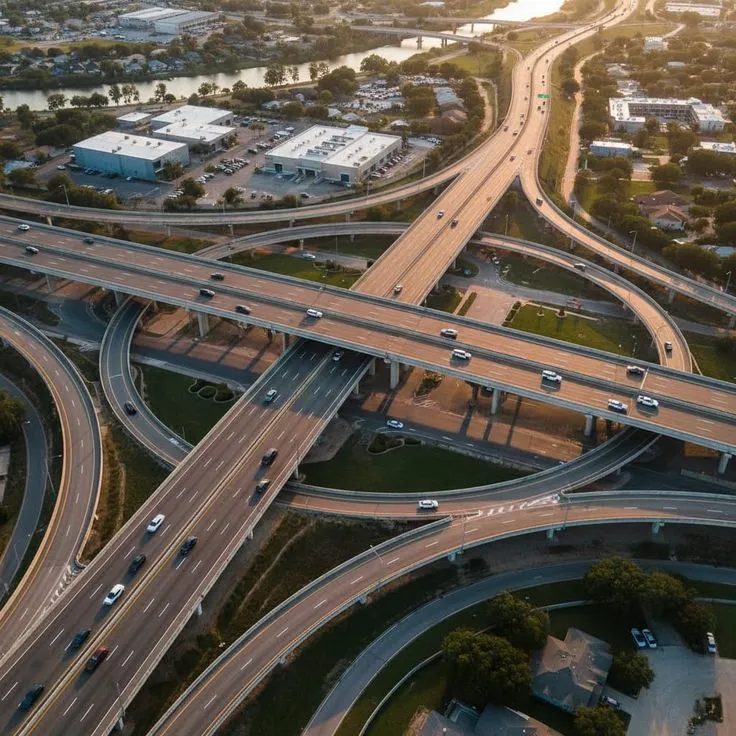
Optimized highway layout, carried out clash detection, and enhanced sequencing of construction to minimize rework and improve bim coordination efficiency throughout the project phases.
Reduction in design rework
Improvement in coordination efficiency
Promoted coordination among structural systems and MEP BIM services minimized conflicts, and enhanced scheduling effectiveness, which led to shorter time periods in finishing infrastructure projects.
faster project delivery
fewer coordination conflicts
Through our outsourced infrastructure BIM Services, we created precise structural detailing for bridges, improved constructability, and reduced material wastage in executing their bridge construction project.
cost savings achieved
reduction in material waste


The Scan to BIM approach converts survey information collected via laser scanning techniques into intelligent models. This facilitates planning renovations, managing assets, and improving infrastructure design.
Utility mapping and subsurface analysis help identify clashes underground to avoid any risks associated with excavation and redesigning. This assists in the safe and conflict-free implementation of construction activities in infrastructural projects.
The integration of GIS data matches the landscape, the utilities, and the spatial network. Thus, this allows for the proper analysis of sites and efficient infrastructure development.
BIM for infrastructure projects contributes to sustainable development in the building industry through the optimization of material use and reduction in construction waste. This facilitates environmentally sound development by providing accurate information and reducing unnecessary rework.